












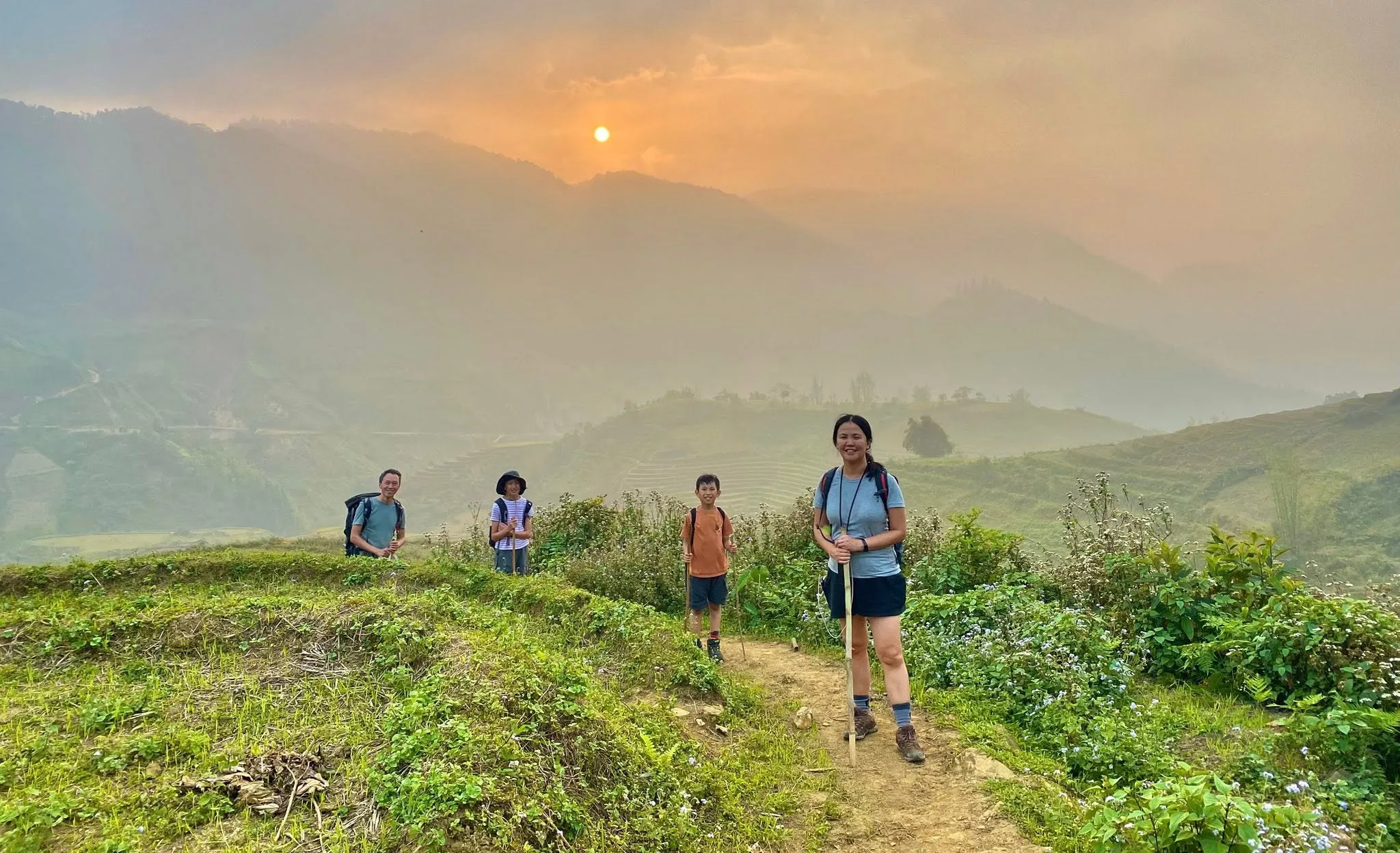
Sapa is more than just the steep climb to Fansipan. Its valleys are filled with gentler trails winding through terraced rice fields, quiet villages, and mountain scenery.
In this guide to trekking in Sapa, we’ll cover the best easy routes for beginners, what to expect along the way, when to go, and how to keep your hike comfortable without working up too much of a sweat.
Why Sapa is perfect for gentle trekking?
If you prefer slow walks, fresh air, and plenty of time to enjoy the scenery, Sapa town is a great fit. Here’s what makes Sapa an easy-going trekking destination.
Gentle terrain: Muong Hoa Valley contour paths
First, the trails around Muong Hoa Valley are surprisingly manageable. Many paths follow the natural contours of the valley, winding between rice terraces and villages rather than climbing steep slopes. The concrete paths through villages are smooth and easy, while dirt trails offer a little more adventure without becoming too demanding
Ideal climate: Cool mountain air year-round
Another big plus is the weather. Sapa’s high-altitude climate stays pleasantly cool, with average temperatures around 15 – 18°C. That means you can walk for hours without feeling like you’re melting. For the most comfortable conditions, aim for spring (March – May) or autumn (September – November), when the weather is generally mild and trails are easier to enjoy.
Local features: Short village distances and cozy rest stops
Finally, Sapa makes it easy to take things at your own pace. Walks between villages such as Y Linh Ho, Lao Chai, and Ta Van often take just one to three hours. Along the way, you’ll find small cafés, drink stalls, handicraft shops, and plenty of homestays where you can stop for lunch or stay overnight. It’s a perfect Sapa soft adventure with very little pressure.
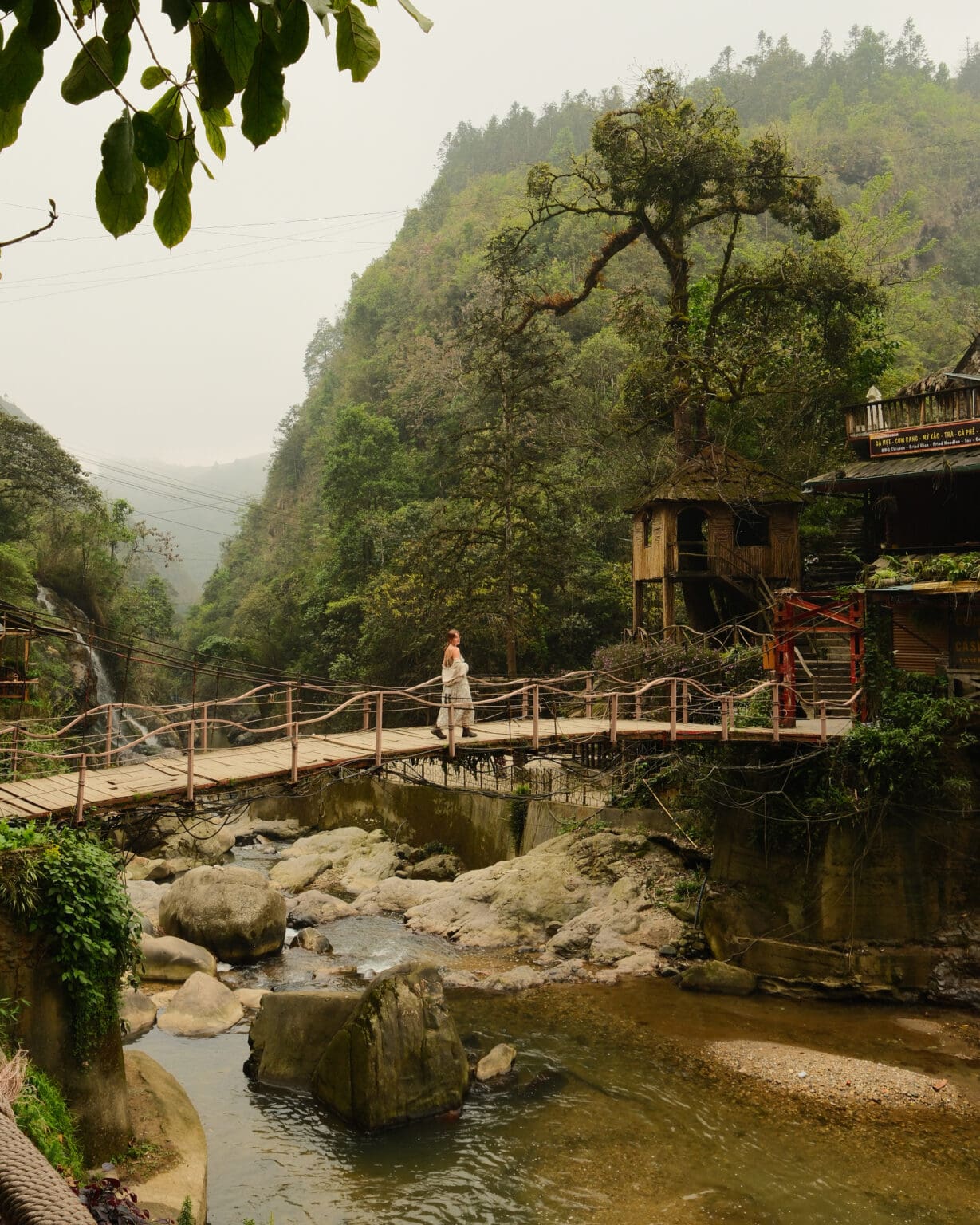
Cat Cat Village
TRANSPORTATION TO SAPA
Before hitting the trails, discover the most comfortable and scenic ways to travel from Hanoi to Sapa.
Top 5 sweat-free and easy trekking trails in Sapa
Sapa Town → Cat Cat Village: The easy half-day walk
- Distance: About 2 – 3 km downhill from Sapa Stone Church to Cat Cat village, plus a 1.7 – 4.2 km village loop, depending on your exit.
- Duration: Around 1.5 – 3 hours at a relaxed pace.
- Difficulty: Very easy, with mostly paved stone paths and steps. Suitable for beginners, families, and older travelers.
- Entrance Fee: 150,000 VND (~$5.70 USD) for adults and 70,000 – 75,000 VND for children. Bring cash, as card payments aren’t always accepted.
This is one of the easiest ways to get a taste of Sapa’s mountain scenery and H’Mong culture without committing to a full-day trek. The route combines a gentle downhill walk, village paths, waterfalls, and plenty of places to stop along the way. These features make it an ideal choice as Sapa trekking tours for families.
The walk starts at the Stone Church and heads downhill toward San Sa Ho Commune, with wide views over the Muong Hoa Valley, terraced rice fields, the Hoang Lien Son range, and Fansipan. Once inside Cat Cat, the village loop takes you through three main areas: traditional H’Mong homes and handicraft workshops, the waterfall area with bamboo water wheels and suspension bridges, and a performance pavilion where free folk shows run hourly from 9:00 AM to 5:00 PM.

Cat Cat Village

Lao Chai – Ta Van Trekking Route
Sapa Town → Y Linh Ho → Lao Chai → Ta Van: The classic route
- Distance: Around 8 – 10 km on village roads, or 12 – 15 km if you take dirt trails through the rice terraces.
- Duration: About 4 – 5 hours, depending on your pace and photo stops.
- Difficulty: Easy to moderate, with mostly gentle slopes and relatively flat sections.
- Entry Fee: Around 150,000 VND for Muong Hoa Valley, or 75,000 – 95,000 VND for the Lao Chai – Ta Van area. Some smaller trails may have no direct entrance fee.
This is one of the most popular beginner trails Sapa has for travelers who want a full morning or afternoon outdoors without taking on a demanding mountain trek. The trail links three villages, each offering a different look at life in the Muong Hoa Valley.
The route begins with a gentle descent toward Y Linh Ho, a peaceful Black H’Mong village beside the Muong Hoa River. Along the way, you’ll pass rice terraces and small farm plots before reaching the village. Stop to learn about traditional hemp weaving, indigo dyeing, and embroidery, then enjoy a simple local lunch with valley views
From Y Linh Ho, the trail continues toward Lao Chai, where Sapa’s famous rice terraces stretch across the hillsides. Take your time here. You can visit traditional wooden homes, see H’Mong women weaving hemp, or stop at the small stone church built by the French in 1990. The final stretch leads to Ta Van, home to the Giay community. Riverside cafés and local homestays make it an ideal place to finish the walk, grab dinner, or stay overnight and turn the route into a relaxed two-day experience.
GOLDEN RICE SEASON IN SAPA
Timing is everything! Learn exactly when and how to witness Sapa’s magnificent terraced fields turn glowing yellow.
Sapa Town → Sin Chai Village: A rustic and untouched escape
- Distance: Around 7 – 8 km round trip from central Sapa Town.
- Duration: About 3 – 4 hours, including relaxed walking, photo stops, and breaks.
- Difficulty: Easy, with gentle slopes and straightforward paths, making it suitable for beginners.
- Entrance fee: Usually around 50,000 – 100,000 VND per person, depending on local controls.
If Cat Cat feels a little too busy, Sin Chai offers a quieter alternative. The route begins near Sapa’s old Stone Church, with about 2.2 km downhill toward Cat Cat Village. After passing its old French-era hydroelectric plant, suspension bridge, and souvenir stalls, the trail branches away from the crowds and continues for roughly 3 km along the valley toward Sin Chai.
Once you arrive, the atmosphere changes completely. Sitting beneath the Hoang Lien Son range and Fansipan, Sin Chai remains a rustic Black H’Mong village with far less tourist traffic. Look out for traditional wooden homes made with old Po Mu timber, while cardamom gardens add a distinctly mountain scent to the walk.
This is also a great place for genuine cultural encounters. You may see local women embroidering on their porches, families processing hemp, or hear water-powered rice pounders working near the stream. Unlike staged demonstrations, these are everyday traditions still practiced by local families.

Sin Chai Village

Ta Phin Village
Sapa Town → Ma Tra → Ta Phin Village: Red Dao culture
- Distance: Around 7 – 12 km, depending on whether you walk the full route or combine the trail with a short vehicle transfer.
- Duration: About 4 – 5 hours at an easy pace, including village stops and photo breaks.
- Difficulty: Easy to moderate, with mostly gentle slopes and relatively flat village paths.
- Entry fee: Usually around 40,000 – 80,000 VND per person, depending on local checkpoints and the season.
This route is a great match for travelers who want to mix a little walking with a lot of culture. The journey starts toward Ma Tra, a quiet Black H’Mong village surrounded by gently rolling rice terraces and farmland. The scenery feels noticeably calmer here, with fewer crowds and plenty of opportunities to stop for a simple local lunch before continuing to Ta Phin.
About 12 km from Sapa Town, Ta Phin is home to both Red Dao and H’Mong communities, but it is particularly known for its Red Dao traditions. Along the village paths, you can see traditional wooden houses, colorful embroidery workshops, and local women working with handwoven textiles and natural dyes. A small chat over a cup of tea can be just as memorable as the scenery.
There are also a few atmospheric stops along the way, including the old French-era Ta Phin Monastery and Ta Phin Cave, where natural stalactites add a touch of adventure without turning the walk into a serious trek. The real reward comes afterward: a Red Dao herbal bath, prepared with dozens of forest herbs, roots, and leaves and served in a fragrant Po Mu wooden tub. It’s a relaxing way to unwind after walking.
Love Waterfall & Silver Waterfall: Scenic nature trails
- Distance: Under 2 km of walking at each attraction. The Love Waterfall trail is about 1.5 km each way, while the Silver Waterfall climb is a short stair walk.
- Duration: Around 1.5 – 2 hours per waterfall, including relaxed walks, photo stops, and time to enjoy the scenery.
- Difficulty: Very easy, with paved stone paths, gentle slopes, and safety railings.
- Location: About 12 – 15 km northwest of Sapa Town, along the scenic O Quy Ho Pass toward Tram Ton Pass.
- Entrance fee: Love Waterfall costs around 70,000 VND (~$2.80 USD). Silver Waterfall also charges a small entrance fee at the roadside ticket booth.
This two-stop outing suits travelers who want big mountain scenery without a demanding trek. Start with a drive along O Quy Ho Pass to Tram Ton, then follow the 1.5 km forest trail to Love Waterfall. The path runs beneath the cool canopy of Hoang Lien National Park, alongside the Golden Stream, before reaching the nearly 100-meter-high waterfall. With mostly paved stones and gentle gradients, it’s a great option for easy day walks Sapa.

Love Waterfall
A short drive brings you to Silver Waterfall, where the falls plunge dramatically beside the road. A brief climb up stone steps with sturdy railings leads to a steel bridge overlooking the rushing water and the misty O Quy Ho Valley. For an easy day out, this route works especially well for families, older travelers, beginners, and anyone who prefers scenery over strenuous hiking.
TRENDING EXPERIENCES IN SAPA
Looking for more than just hiking? Check out these highly-rated cultural and wellness activities around the misty town.
Guided vs. Self-Guided: Do beginners need a local guide for trekking in Sapa?
For first-time visitors, deciding between a local guide and going solo can make a big difference. The good news is that both options work in Sapa. Your choice mostly comes down to the route, weather, and how much freedom or local insight you want.
Solo trekking in Sapa: When self-guided trekking makes sense
- Best season: Stick to March – May or September – November, when conditions are generally drier, visibility is better, and dirt trails are less slippery.
- Best routes: Beginners can comfortably consider shorter routes such as Sapa Town → Cat Cat Village or the village roads connecting Y Linh Ho → Lao Chai → Ta Van.
- Must-have: Download an offline map such as Maps.me, Google Maps offline, or Gaia GPS before leaving Sapa Town. Mobile coverage can become unreliable in deeper parts of the valley and near forested areas.
Going solo gives you complete control over your pace. You can stop for photos, linger over lunch, or change plans whenever you feel like it. Sapa is also relatively easy to navigate, with village paths used daily by local residents, cafés and homestays along many routes, and villages generally just 1 – 3 hours apart on foot.

When beginners should hire a local guide in Sapa
Some situations are better handled with local knowledge. During the rainy season from June – August or periods of heavy winter fog from December – February, muddy trails can become slippery and visibility can drop dramatically. A local guide knows which sections to avoid and where safer alternatives are.
A guide is also strongly recommended for remote or off-the-beaten-path trails, including bamboo forests, cardamom forests, or more demanding mountain routes. They can also help you avoid accidentally entering private farmland, where small paths may lead directly through someone’s rice fields or corn plots.
Why a local guide can be worth it
The biggest advantage isn’t just navigation. A local H’Mong or Red Dao guide can turn a walk into a deeper cultural experience, explaining everything from rice terrace irrigation and medicinal plants to weaving and indigo dyeing.
Prices of a Sapa walking tour with local guide are also relatively accessible, expected from 600,000 VND ($24 USD) per person. At Travel Sense Asia, we support local communities by working with local guides from the ethnic minorities alongside our own team. This allows us to offer deeper local knowledge while helping direct tourism income towards local livelihoods.
OFFICIAL VIETNAM TOURISM GUIDE
Travel Sense Asia is proud to be featured on the official Vietnam Tourism website as a trusted premium travel partner.
Essential packing list for trekking in Sapa
Getting to Sapa and moving around the valley is fairly straightforward, especially if you keep your plans simple and pack light.
- High-traction shoes: Choose trekking shoes or sneakers with deep rubber lugs for better grip on muddy paths, wet stones, and slippery village trails. Break them in 1 – 2 weeks before your trip to reduce the chance of blisters.
- Lightweight layers: Wear a moisture-wicking synthetic or merino wool base layer, a light fleece or puffer jacket, and a waterproof, windproof rain jacket. Skip cotton, which stays damp longer when you sweat.
- Bamboo walking pole: A simple bamboo pole can act like a “third leg”, giving you extra balance on muddy or sloping sections and helping reduce pressure on your knees.
- Small dry bag: Keep your phone, power bank, camera, and passport inside a small waterproof bag before putting them in your backpack. Sapa’s humidity and sudden rain can make electronics vulnerable.
- Local cash: Carry enough VND in small bills, around 20,000 – 100,000 VND, for drinks, snacks, village stalls, and handmade goods. Cards and bank transfers may not always work in remote areas.
- Small daypack: Leave your large suitcase at your hotel in Sapa and carry a 15 – 25 liter daypack instead. It’s much easier on gentle climbs and village trails, especially if you’re staying overnight at a homestay.
Conclusion
Ready to experience trekking in Sapa without pushing yourself to the limit? From easy village walks and rice terraces to scenic valley trails, Sapa makes it easy to enjoy the mountains at your own pace. Choose a route that matches your fitness level, pack light, and respect the local communities along the way.
For a smoother trip, let Travel Sense Asia help you plan the right trail, local guide, transport, and homestay for your Sapa adventure.
Frequently Asked Questions (FAQs)
Can elderly travelers and young children do these treks?
Yes. Easier routes like Sapa Town → Cat Cat are suitable for families and older travelers, though comfortable footwear and breaks are recommended.
What is the best month for easy trekking?
March to May and September to November offer generally pleasant conditions, clearer views, and more comfortable walking weather.
Is Sapa safe for female travelers?
Generally, yes. Stick to well-used trails, check the weather, keep your phone charged, and consider a local guide for quieter routes.